Cart
No products in cart
The advantages and disadvantages of using cables to start a car engine instead of using a lithium battery starter
Author: Brittany Lin NOCO Team Leader
If it hasn’t happened to you already, chances are it will. In fact, millions of motorists experience a dead battery every year. A dead battery is something that can happen to the best of us, regardless of our level of experience. Even knowing and using battery care technologies like battery chargers and jump starters can’t 100% prevent the occasional dead car battery. There are many methods for jump starting your car. You can use the old, traditional battery jumper cables (also called booster cables) – crap. Or you could use a portable lithium-ion battery jump starter – much better. Here are the details on each of the jump starting methods, including the technique as well as the pros and cons of each method.
How to start a car engine with battery jumper cables
To understand how to jump start a car with a dead battery using battery jumper cables, you'll need a few things. First, you'll need a spare vehicle that's working. And second, you'll need a good set - not a cheap set - of battery jumper cables. Battery jumper cables are still sold at most automotive retail chains (e.g. AutoZone, Canadian Tire, etc.) and come in a variety of cable thicknesses and lengths.
About battery connection cables
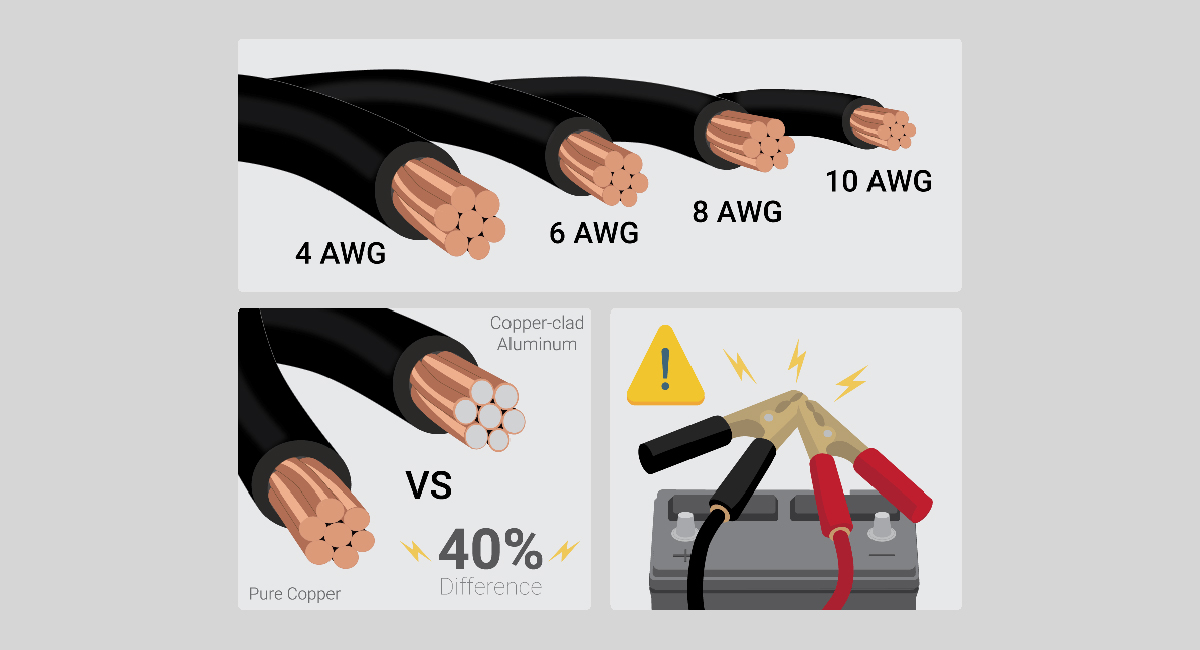
Most auto parts stores sell 6mm2, 10mm2, 16mm2 and 25mm2 cables which are usually around 3.5m long. In the case of the cross-section, the higher the number, the more power. I would not recommend using 6mm2 or 10mm2 cables. They simply cannot carry enough power. If your vehicle's engine is a petrol engine with a displacement of up to 3 litres, then 16mm2 and 25mm2 cables should be sufficient, but it may take a few minutes before your engine starts to turn. If your vehicle's engine is a petrol engine with a displacement of over 4 litres or any type of diesel engine, I would suggest you look at 35mm2 or 50mm2 battery connection cables. Similarly to the cable cross-section, the length of the battery connection cable plays a role and the higher the number (the longer the length), the lower the power. I would not recommend the length exceeding 3.5 meters, if possible.
Make sure the battery jumper cables you purchase are made of 100 percent copper. The vast majority of battery jumper cables on the market are made of copper-clad aluminum wires (also known as copper-shielded aluminum cables). The difference in electrical conductivity between pure copper cables and copper-shielded aluminum cables is significant - about a 40 percent difference in conductivity.
Before using battery jumper cables, you should consider the risks of using them. The most notable risks are identifying the correct polarity of the car battery terminals and inadvertently shorting the battery clamps.
Either way, both result in abundant sparks that are not beneficial near fuel fumes and can even cause arc welding if the connection is continued for too long. When handling battery connection cables, you must be aware of proper connection procedures and never touch the battery clamps together.
Preparation before starting your vehicle's engine with cables
Before starting a car with cables, make sure that both vehicles are positioned facing each other and as close together as possible without letting the vehicles touch each other. Make sure that the selector lever on both vehicles is in the Park position (neutral in the case of manual transmissions). As a safety precaution, you can also apply the handbrake on both vehicles.
6 steps to start your car engine using battery jumper cables:
1. Make sure the ignition on both vehicles is off.
2. Identify the polarity of the battery terminals, identifying which is the positive battery terminal and which is the negative battery terminal. The positive battery terminal is usually red and marked with a plus (+) symbol or POS (for positive). The negative battery terminal is black and marked with a minus (-) symbol or NEG (for negative).
3. Connect the red (positive) clamp of the battery connection cable to the positive terminal of the battery on the working vehicle. Then connect the other red (positive) clamp of the battery connection cable to the positive terminal of the battery on the vehicle with the dead battery.
4. Connect the black (negative) clamp to the negative terminal of the battery on the running vehicle. Then connect the other black (negative) clamp of the battery connection cable to the vehicle chassis body. Do not connect to the negative terminal of the battery - more on this in a moment.
5. Attempt to start the vehicle with the dead battery. If the vehicle engine does not start immediately, wait a few minutes to allow current to flow to the battery. Depending on the age and condition of the vehicle’s running battery, it may take some time for the battery to recharge and for ions to develop on the battery plates.
6. Disconnect the battery cable in reverse order, starting with removing the black (negative) battery cable clamp.
Pros
Cons
How to start a car engine with a lithium battery starter
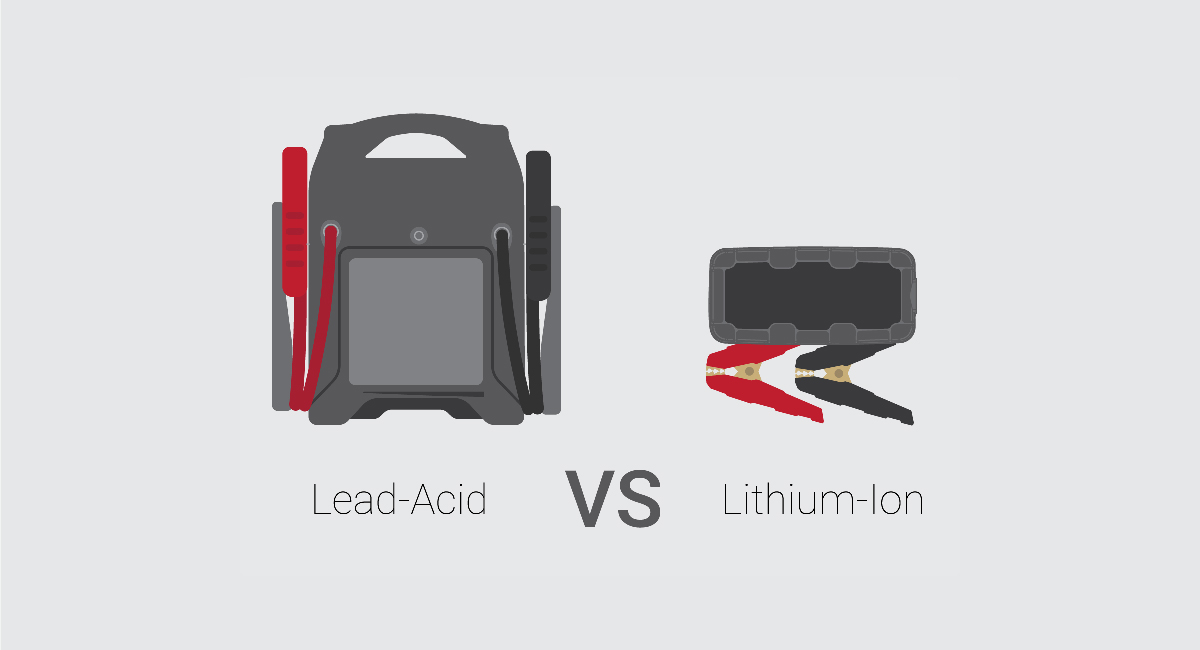
Technology has come a long way. Jump starters were once the norm for starting a vehicle with a dead battery. Then came portable lead-acid battery jump starters. Lead-acid battery jump starters solved many of the problems associated with jump starting, most notably the need for an extra vehicle. However, lead-acid battery jump starters still present the same safety hazards as jump starters, requiring knowledge of the correct polarity of the battery terminals, and often containing a heavy lead-acid battery. In addition, lead-acid battery jump starters also suffer from significant performance loss when not maintained at a full charge. Over time, a lead-acid battery jump starter develops a condition known as sulfation, which is the permanent loss of battery capacity when left in a discharged state. The loss of battery capacity reduces the ability of a lead-acid battery starter to provide high discharge currents when needed. And high self-discharge rates often render a lead-acid battery starter useless within weeks. The need to be constantly charged, the high self-discharge rate, and the high weight make lead-acid battery starters non-portable and more suitable for your garage than your car.
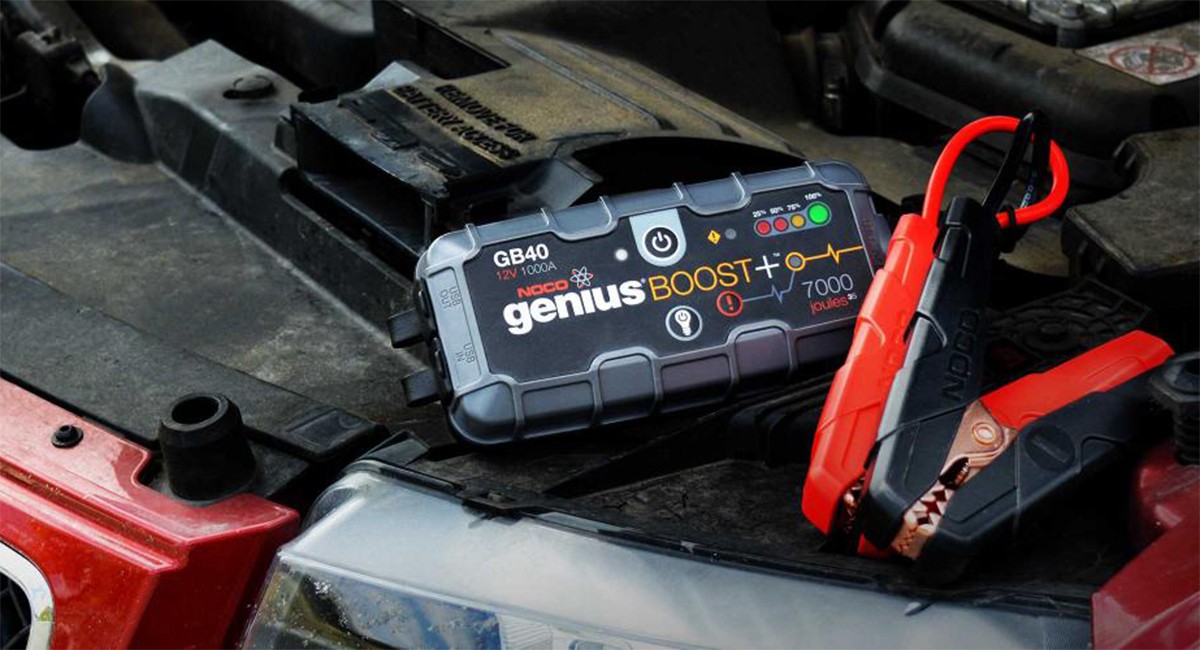
The lithium-ion car starter is making its appearance. These types of starters, as the name suggests, are powered by a lithium-ion battery rather than a lead-acid battery. The advantages of lithium technology over lead-acid technology are obvious. Lithium-ion batteries, due to their energy density, are smaller and lighter than their lead-acid counterparts. In practice, lithium-ion starters are around 80 percent smaller and lighter than lead-acid starters. And lithium-ion starters also perform multiple functions, such as powering an LED flashlight, recharging USB devices (e.g. recharging an iPhone) or supplying power to other 12-volt devices, such as a tire pump or a power inverter. Check out the NOCO Genius Boost lithium-ion starters.
With over 234 million motorists in the United States, it’s surprising that the vast majority of drivers don’t use a lithium battery jump starter. The most common objection I hear is a lack of confidence that the device actually works. Most motorists are so familiar with the old traditional jumper cables or the big, heavy lead-acid battery jump starters that a small, compact device like a lithium battery jump starter seems mysterious. But let me explain the “how.”
Lithium-ion batteries have an incredibly high energy density compared to lead-acid batteries. In other words, lithium-ion batteries provide similar discharge current capacity but at a fraction of the size. For example, most lead-acid batteries have a nominal discharge rate of 20C. So, a 10 amp-hour lead-acid battery can deliver 200 amps of power. Whereas a 1 amp-hour lithium-ion battery rated at 200C can deliver the same 200 amps, but with 10 times the volume requirements. So, yes, the lithium-ion battery in your smartphone, if designed properly, could have the potential to jump-start your car engine. Additionally, lead-acid batteries lose their ability to deliver discharge current as the battery discharges, while lithium-ion batteries provide constant discharge currents until they are almost completely discharged. Like battery jumper cables, the quality of a lithium-ion battery jump starter is directly proportional to its ability to start your car's engine. Here are a few simple steps:
4 steps to start your car engine using a lithium battery jump starter
1. Connect the red (positive) battery clamp of the lithium battery jump starter to the positive battery terminal on the vehicle with the dead battery.
2. Connect the black (negative) battery clamp of the lithium battery starter to the frame body - more on this in a moment.
3. Try to start the vehicle with the dead battery. If the vehicle engine does not start immediately, wait a few minutes to allow current to flow to the battery and try again.
4.Disconnect the lithium battery starter in reverse order, starting with removing the black (negative) battery clamp of the lithium battery starter.
Pros
Cons
The most common questions about jump starting a car engine
Regardless of the method you choose, if your car engine won't start after multiple attempts, there's a good chance the problem is something other than your battery. See the Why Won't My Car Start blog for more details. Additionally, below is additional information on starting your car engine.
Does cranking the engine after starting it help?
Cranking the engine after starting it helps your car battery recharge faster. When the engine speed is high, so does the engine alternator. And when an alternator spins at a higher speed, it produces more electricity. And when it produces more electricity, the battery recharges faster. By the way, it’s also a good idea to let your vehicle run for 20-30 minutes after starting it. An even better idea is to plug the battery into a smart battery charger to fully recharge the vehicle battery. If you have a smart battery charger with a recovery or repair function, I highly recommend using this feature after starting a dead battery. The main purpose of the recovery charging function is to remove the lead sulfate crystals that have accumulated during battery discharge and convert them back into active material (or recovered battery capacity).
Why is there a connection to the chassis body when starting a car engine?
You should prefer the connection to the chassis frame rather than the negative battery terminal because it provides a more direct return path to the assisted battery. Therefore, the return current does not have to pass through the negative terminal and the dead battery cable and then to the connection cable to the other battery or to the starter. It can proceed directly from the chassis frame to the connection cable to the other battery or to the starter. The more direct return path allows for improved current flow and lower voltage drop.
Why should the positive cable clamps be connected first?
Have you ever wondered why you have to connect the positive terminals first and then the negative terminals? This is because nothing bad can happen if you leave the negative battery clamps hanging off the vehicle frame. If they could accidentally come into contact with something, it would probably already be on the body. If you have connected both the positive and negative terminals to the battery of either the car with the good battery or the car with the dead battery, the other end is now live and accidentally bringing the battery clamps together will cause a short circuit, unless you are using a lithium battery safe jump starter. If you connect the negative battery clamps first and then connect the positive battery clamps, you may create a short circuit because the opposite side is likely to be touching something that is grounded.