Cart
No products in cart
Explanation of 4 essential car fluids
Author: Zachariah Kohler NOCO® Team Leader
Your vehicle's engine survives on the fluids you put in it. Whether it's engine oil, coolant, transmission fluid, or fuel, it's critical to use the correct fluid specified for your car. The best way to decide which fluid your vehicle needs is to refer to your owner's manual. When deciding on the right coolant for your vehicle, making the wrong choice could combine two incompatible coolants, causing the coolant to freeze and damage your engine's cooling system.

Engine oil
Engine oil guide
Understand the differences between each type of oil.
Your vehicle's engine relies on the oil that circulates within it. The condition of the oil inside your vehicle's engine can make or break the life of your engine. To ensure that the oil in your vehicle's engine is in good condition, it is important to check the appearance and level of the oil. It is also important to perform regular oil changes in your vehicle's engine.
Determining the right oil
Engine oil can be determined by three factors: engine condition, engine load, and the ambient temperatures the engine is exposed to. These three factors determine the condition of your engine and whether it needs additional care.
Conventional
- Heat resistant
- Drag reduction
- Special viscosity for engines
- For high mileage
- 75,000 miles or more
- Additives for seal protection
- Prevents evaporation
- Prevents combustion
Synthetic
- Specially designed for use
- High quality lubrication
- High and low temperature use
- Superior cleaning capabilities
- More expensive, but considered the best
Determining viscosity

Oil change
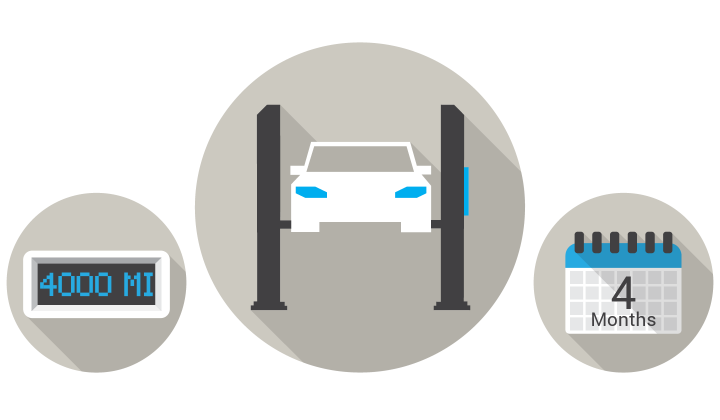
The best way to know when to bring your car in for an oil change is to first consult your car's owner's manual. If you're still unsure about how often you should change your vehicle's oil, an industry rule of thumb is every 4,000 miles or every 4 months, whichever comes first.
How much does an oil change cost?
According to pricing data obtained by Angie's List, a conventional oil change costs between $21 and $42 on average. If you opt for a synthetic oil, it could cost you an average of about $38 to $59.

Coolant
How to take care of your engine cooling system.
Importance of your vehicles coolant
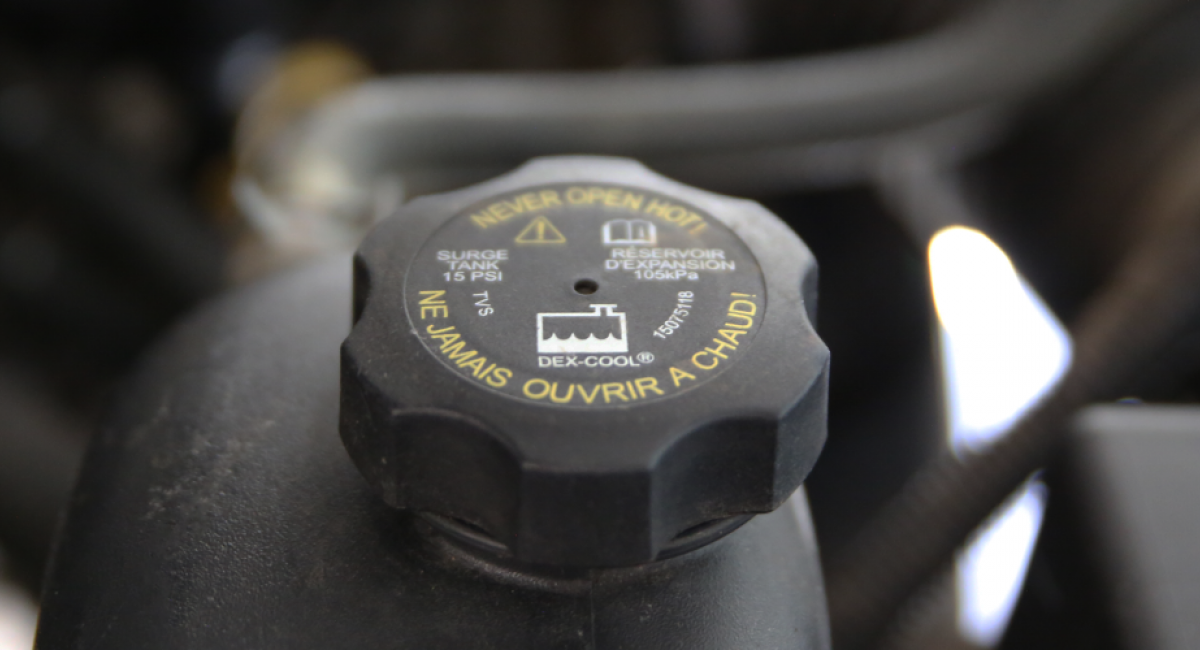
Your vehicle's coolant is important because it prevents freezing in the winter and boiling in the summer. Coolant also has corrosion-preventing properties that keep the rubber parts and seals of your cooling system in good condition.
Coolant conservation
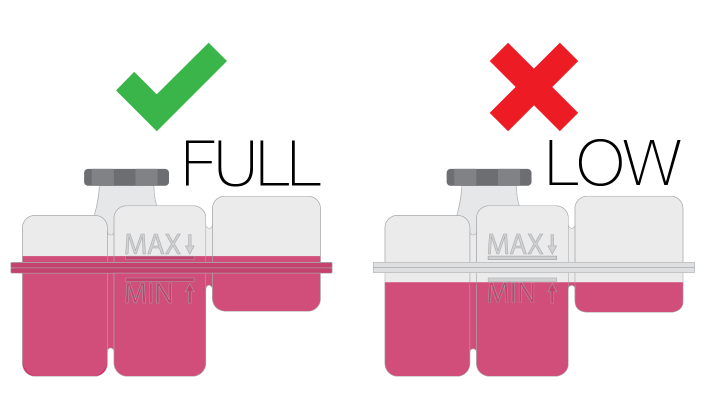
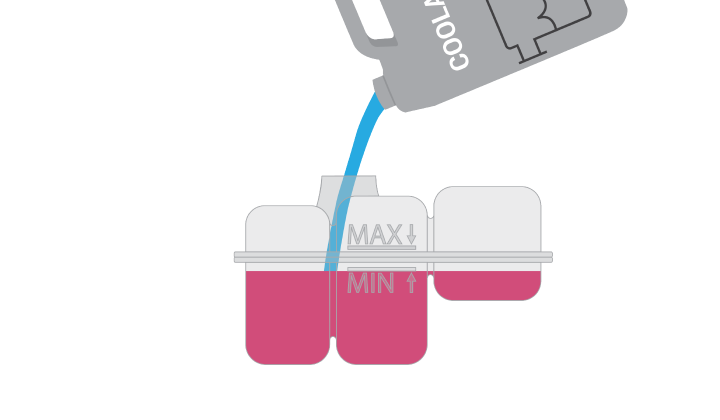
Your vehicle's cooling system requires minimal maintenance, but it is important to check your coolant levels regularly. Most coolant reservoirs have a mark on the side that shows the maximum and minimum coolant levels. If the coolant level is below the minimum line, it is important to add coolant before operating your vehicle.
Types of coolant
Inorganic Acid Technology (IAT)
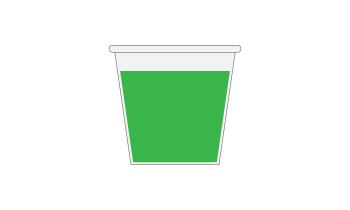
IAT is used on most domestic vehicles manufactured from 1920 to 1990 by GM, Ford and Chrysler. This coolant is recommended to be drained every 30,000 miles or every 2 years and is usually a bright green color.
Organic Acid Technology (OAT)
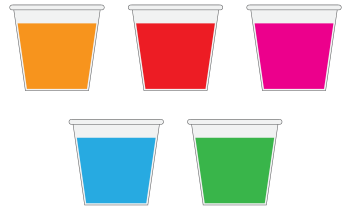
It is most commonly used in VW, GM, Honda and Toyota vehicles. This coolant has corrosion inhibitors to allow your vehicle to operate for longer mileage. It is recommended that you drain this coolant every 150,000 miles or every 5 years. OAT is primarily available in orange and reddish colors, but can also be green, pink or blue.
Hybrid Organic Technology (HOAT)
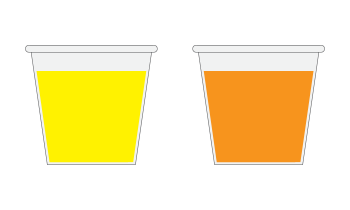
Similar to OAT, HOAT is designed to last approximately 150,000 miles or 5 years before needing to be drained. HOAT is a blend of IAT and OAT and is much easier to identify because it comes in two colors, yellow and orange. The coolant is most commonly used by most major European, German, and Asian car manufacturers, as well as some Chryslers.
Don't mix types and colors
In the case of OAT it is not imperative to stick to one color, but it is recommended to avoid mixing colors whenever possible. In addition to OAT it is very important to avoid mixing coolant types and colors. A cooling system with green IAT should only be topped up with water or other green IAT. The effects of mixing coolants include corrosion, freezing of the fluid and ultimately system failure.

Transmission fluid
Transmission fluid maintenance
Understand transmission fluid maintenance.
Your vehicle's transmissions convert the energy generated by your engine into motion for your vehicle on the road. The best way to keep your transmission in good condition is to regularly check the condition of the fluid and change the fluid if necessary. Transmission fluid is the lubricant for the gears and levers inside your transmission. Over time, dirt and grime build up, causing the fluid to thicken, creating more pressure in the transmission. It's important to keep your transmission in good condition because the transmission and engine are the two most important parts of your vehicle.
Stressing your gearbox
The increase in the operating temperature of your vehicle's transmission is the main cause of a breakdown. There are three reasons why your transmission will heat up.

What causes a gearbox to overheat?
Transmission operating temperatures can increase for a variety of reasons. The three most common reasons for a transmission to heat up are carrying heavy loads, towing trailers, and stop-start driving in the city. It is recommended that you consult your owner’s manual for the recommended towing and towing weights for your vehicle. Your vehicle’s transmission is designed to function properly, as long as it is properly cared for and maintained.

When should you drain a gearbox?
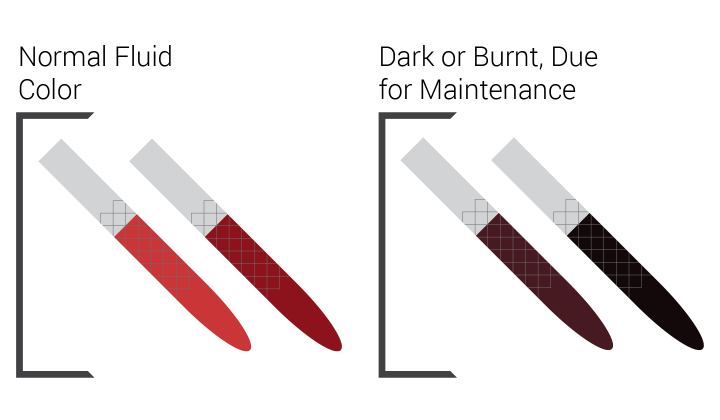
It is recommended by mechanics to perform a transmission fluid drain on your vehicle every 50,000 miles. Your vehicle owner's manual has a maintenance schedule that lists specific mileages at which your vehicle's transmission fluid should be drained. Another indication is the color or smell of the fluid. Under extreme conditions, transmission fluid can become discolored, change color, and start to smell.

Combustible
Fuel types for your vehicle
Understand your vehicle's fuel.
Fossil fuels are the most common type of fuel used by consumers on the road today. Recent developments in renewable fuels have helped more and more vehicles run on alternative fuels on the road, but fossil fuels are still the most widely used fuel source. Both gasoline and diesel have benefits as a reliable fuel source and can be compared based on the consumer benefits of using each.

Petrol is a very common fuel used in most light vehicles on the road. The main benefit of using petrol is that it is cheaper per litre than diesel. Petrol is less dense than diesel allowing it to evaporate immediately when it enters a cylinder. Once inside the cylinders, the vehicle's spark plugs ignite the gas vapours, providing power to your vehicle.
Pros
- Quick start
- Light weight
- Lower cost
- Higher horsepower
Cons
- Carbon dioxide production
- Highly flammable
- Less torque
- Less reliable on average

Diesel is also a very common fuel source, especially in commercial trucks and large equipment. Most trucks offer the option of a diesel engine, and companies like Volkswagen and Audi have diesel vehicle options. Diesel, like gasoline, is a fossil fuel, but it is much heavier, denser, and less flammable. Because diesel is less flammable, the ignition process of the fuel is very different from that of gasoline. Unlike gasoline, diesel is ignited by high pressure and high heat in the cylinders. The benefits of having a diesel vehicle are that they tend to have a longer life than gasoline engines, the engine produces fewer ozone-depleting gases, and diesel engines produce more power per liter of fuel, giving the engine better fuel economy.
Pros
- Durable
- Better fuel economy
- More torque
- Reliable
Cons
- Heavy
- Higher fuel costs
- Less horsepower
- Hard to start in cold weather