Cart
No products in cart
The difference between wet, gel, AGM and EFB batteries
Author: Brittany Lin NOCO® Team Leader
Often, the fact that lead-acid batteries have different chemical compositions causes confusion and they are considered separate technologies. However, the majority of batteries used in most modern vehicles are lead-acid, as well as AGM. Absorbent Glass Mat (AGM) batteries, as well as Flooded (or Wet Cell), Gel Cell and Enhanced Flooded Batteries (EFB) are subcategories of lead-acid technology. Just as lithium cobalt oxide, lithium manganese oxide, lithium nickel cobalt oxide and lithium iron phosphate are all subcategories of lithium-ion batteries. Each subcategory of lead-acid batteries is classified into two main groups: Flooded and Valve Regulated Lead-Acid (VRLA), which is also known as Sealed Lead-Acid (SLA). Below we will analyze the differences between each technology.
Flooded (Wet Cell)
Type: Flooded
Life Cycle: 250-500 cycles
Duty cycle: 50% DOD
Typical charging voltage: 14.4-14.5 Volts
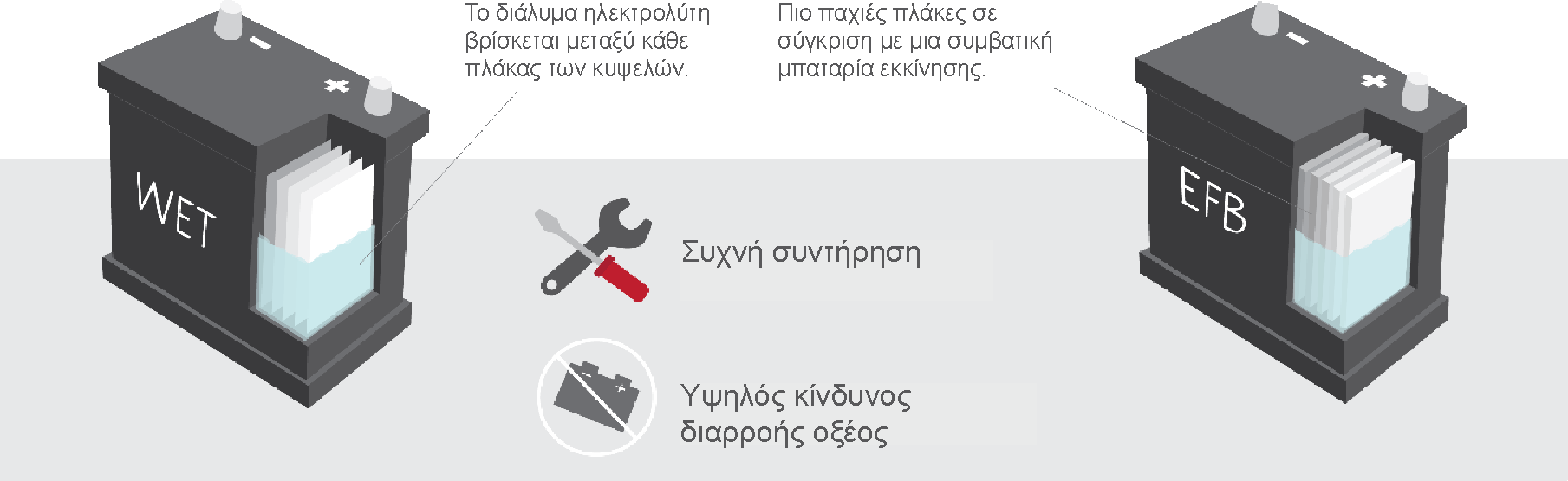
Flooded or Wet Cell batteries are the most common and economical chemical composition of lead-acid batteries. Flooded batteries contain a liquid electrolyte solution (hence they are considered “wet” type), which requires maintenance after a few charge and discharge cycles. Most Flooded batteries require regular maintenance of their electrolyte every 3-6 months. If a Flooded battery is accidentally overcharged, additional electrolyte can be added to the battery, so that it is more resistant to overcharging. However, these batteries show a significant reduction in their life if discharged below 50% of the depth of discharge. It is important to avoid contact with the battery acid and to install them in a vertical position.
Enhanced Flooded Battery (EFB)
Maintenance: Maintenance required
Type: Sealed Lead Acid (SLA)
Life Cycle: 500-1000 cycles
Duty cycle: 60% DOD
Typical charging voltage: 14.4-14.5 Volts
Enhanced Flooded Batteries are an economical battery type used in mild hybrid vehicles that are designed to withstand the cycling demands of start-stop technology. EFB batteries are similar to Flooded batteries in that they contain a liquid electrolyte solution, but are designed to provide twice the life and approximately 16% more cycle life. Despite their increased performance in start-stop applications, EFB batteries are charged in a similar manner to standard Flooded batteries and are installed in a vertical position.
Gel Cell
Maintenance: No maintenance required
Type: Sealed Lead Acid (SLA)
Life Cycle: 300-500 cycles
Duty cycle: 50% DOD
Typical charging voltage: 14.2-14.3 Volts
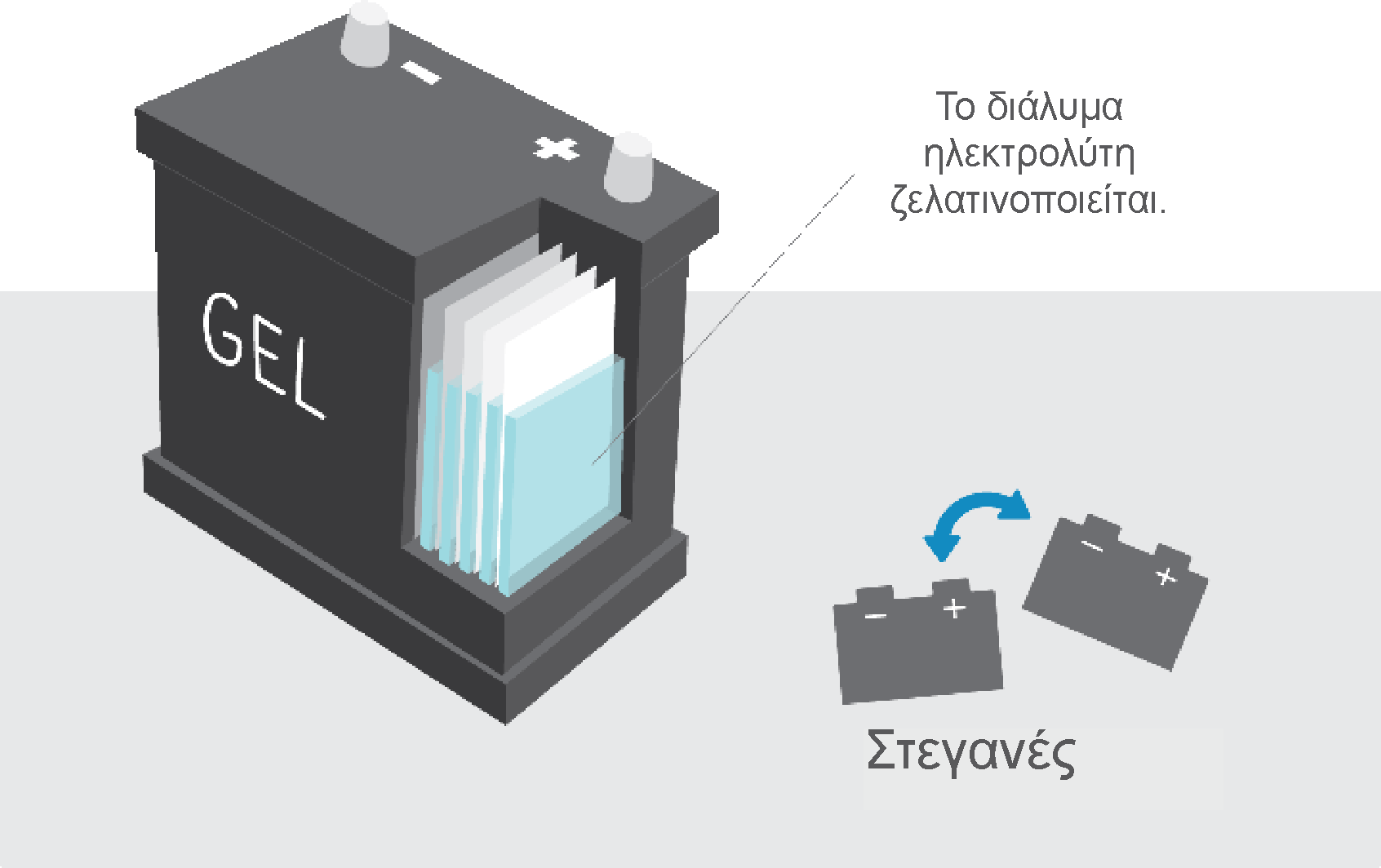
Gel Cell batteries are a sealed version of a Flooded battery. They are similar internally, except that the antimony in the lead plates is replaced by calcium and the electrolyte is combined with fumed silica to produce an immobilized solution. Unlike Flooded batteries, Gel Cell batteries can be installed in almost any position. They exhibit less electrolyte evaporation, increased cycle life, and greater resistance to vibration, shock, and acid stratification. Although Gel Cell batteries are still commercially available, their applications have been limited due to the development of Absorbent Glass Mat (AGM) batteries.
Absorbent Glass Mat (AGM)
Maintenance: No maintenance required
Type: Sealed Lead Acid (SLA)
Life Cycle: 400-600 cycles
Duty cycle: 80% DOD
Typical charging voltage: 14.7-14.8 Volts
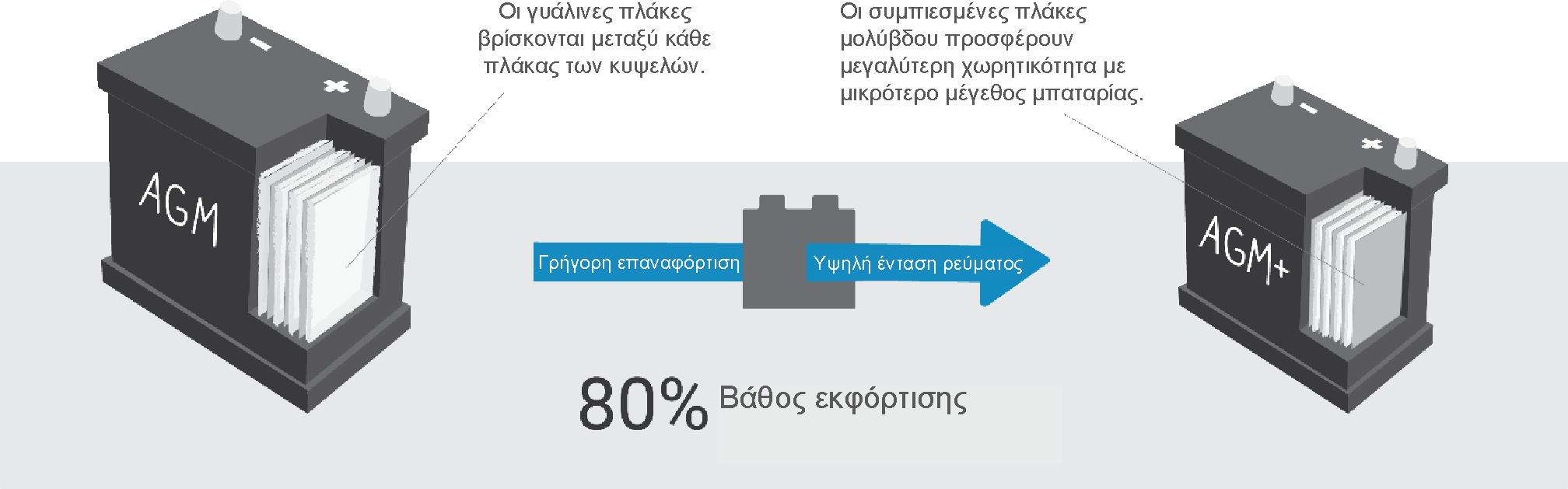
Absorbent Glass Mat (AGM) batteries are the latest in sealed battery technology. Instead of a gelling agent, AGM batteries use a fiberglass-like separator material that absorbs the electrolyte. AGM batteries therefore outperform Flooded and Gel Cell batteries because they have low internal resistance (which produces higher current), charge up to five times faster, and have a depth of discharge of up to 80%. Like all Sealed Lead-Acid batteries, AGM batteries are subject to problems if improperly charged.
Advanced Absorbent Glass Mat (AGM+)
Maintenance: No maintenance required
Type: Sealed Lead Acid (SLA)
Life Cycle: 800-1,200 cycles
Duty cycle: 80% DOD
Typical charging voltage: 15.2-15.3 Volts
Advanced AGM or AGM+ batteries are similar to traditional AGM batteries, but have an even longer cycle life and lower internal resistance, making these battery types ideal for micro-hybrid vehicles with start-stop technology.