Cart
No products in cart
How do starter batteries differ from deep cycle batteries?
Starter batteries and deep cycle batteries differ primarily in the requirements and degree of discharge they can withstand.
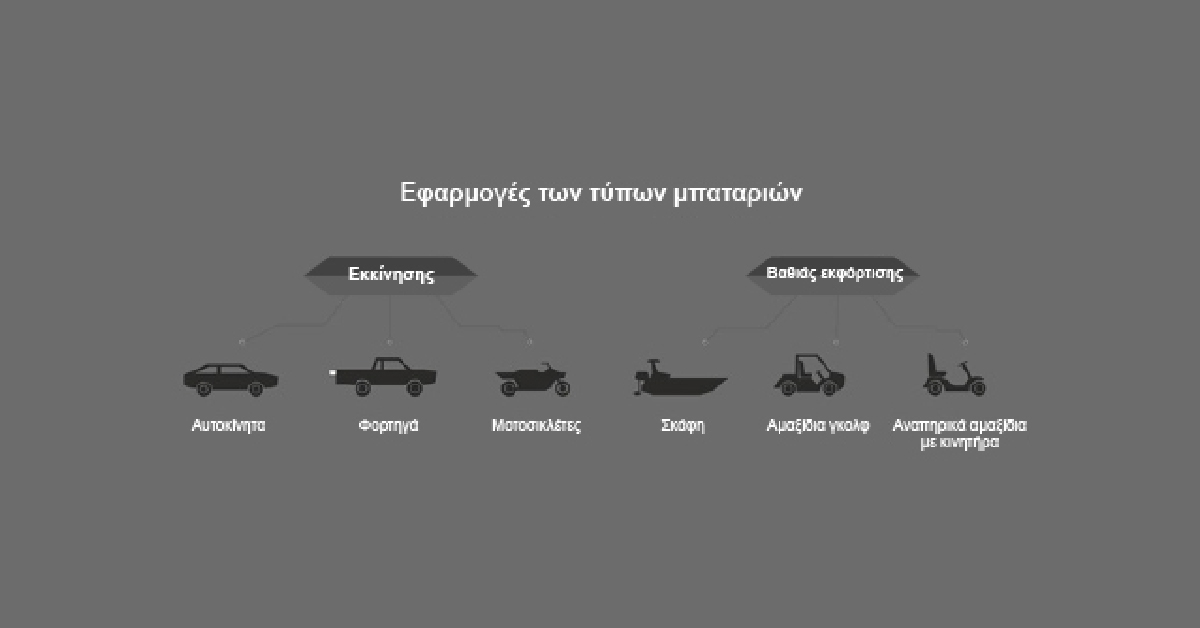
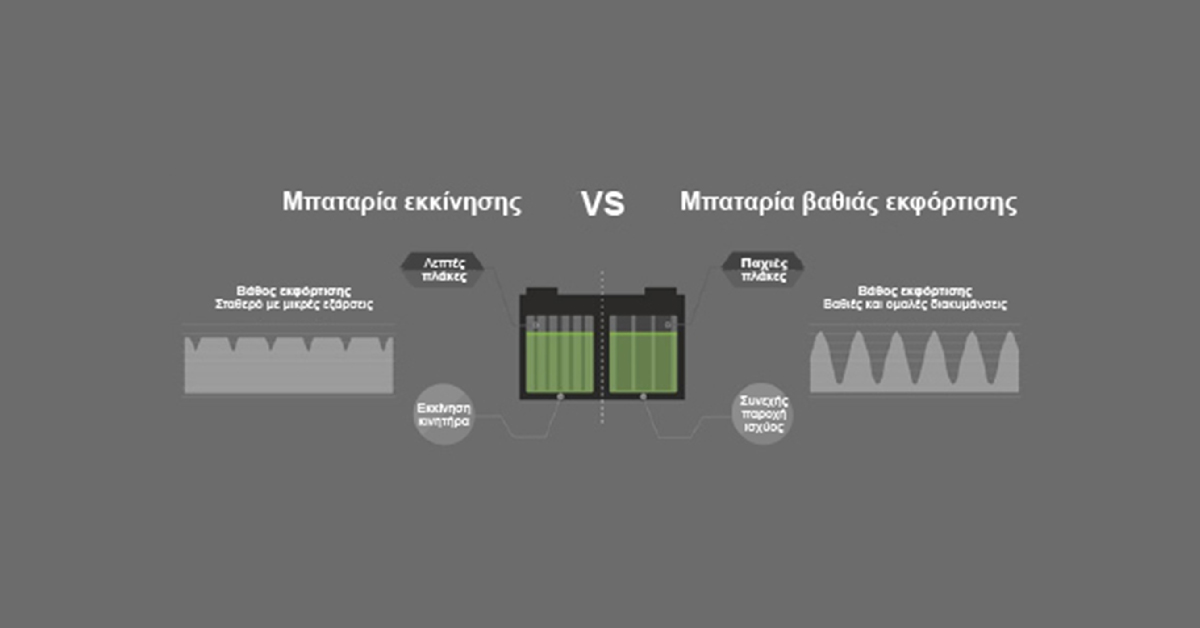
A starter battery, also known as a Starting, Lighting and Ignition (SLI) battery, is designed to provide maximum power for a short period of time - approximately 1-3 seconds. Despite its ability to deliver high current, it cannot handle deep discharges without permanent long-term consequences. In contrast, a deep cycle battery provides continuous power rather than short power spikes. It is designed to handle the cyclic demands of deep discharge.
Deep cycle battery
While starter batteries are designed primarily for starting engines, deep cycle batteries are designed for continuous power delivery. They are commonly used in marine, golf cart, and industrial equipment applications. Rather than being designed for high bursts of energy, they are designed for maximum capacity. The increased amp-hour capacity is achieved through thicker plates, making them ideal for deep cycle cycles and long cycle life. Although designed for deep discharge, discharging these types of batteries to more than 80% discharge will affect their life.
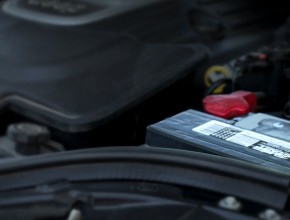
Starter battery
Because starter batteries are primarily used to start a vehicle's engine, most starter batteries are rated by Cold Cranking Amps (CCA). CCA is defined as the number of amps a battery can deliver at 0 degrees C (32 degrees F) for 30 seconds while maintaining a voltage of at least 1.2 volts. In other words, the higher the CCA, the greater the ability to start engines (and vice versa). There is no direct correlation between a battery's CCA and its storage capacity in amp hours. Starter batteries are designed with thin plates to achieve low internal resistance and maximum surface area, which allows for maximum current torque.